
Jill’s Journey Through Back Pain: A Case Study Part I

Who Is Jill?

When Jill first presented to the Wellness Station, she described her life as “a mess” and felt skeptical that another attempt at physical therapy would make any kind of difference. Jill is 75 years old and had stayed generally active with outdoor rowing and exercising with weights. However, Jill has experienced recurrent bouts of debilitating back pain over the last 15 years, which tended to set her back for quite some time. She had been to physical therapy several times, which never made any long-lasting difference for her.

Jill was having an extremely challenging year. She had become more sedentary during the pandemic, as she did not feel as comfortable working out with her personal trainer. She lost her husband, her lifelong best friend. On top of this, her sister also lost her husband around the same time.

While at her sister’s house to support her both emotionally and physically and to re-organize their house, Jill suffered a severe back injury. A herniated disc in her lumbar spine became sequestered, and the sequestered disc fragment led to nerve compression. Jill began to experience severe back and leg pain, which was constant and severe. She had herniated several discs in the past, and she described this pain as far worse.

Jill went through a course of traditional physical therapy and described it as follows:

““It was very modest stuff. I felt like there wasn’t much of a progression, and it wasn’t as individualized as I would have hoped. They might have used the same printable exercises as any other old lady with back pain!” ”

Jill Finds The Wellness Station

Jill was referred to the Wellness Station four months after her sequestration injury, and was still experiencing constant, debilitating pain. In coming to the Wellness Station, Jill hoped for improvement but wasn’t sure what to expect. Her goals were to improve her fitness and build her core strength in order to be active, independent, and play with her grandchildren- however, she was beginning to lose hope that any of this would be possible.

““In the first session, I found Jacob Tyson to be an exceptional listener as I outlined my back pain history, the recent event and goals. The room was calm as was his demeanor that set a relaxed tone.””
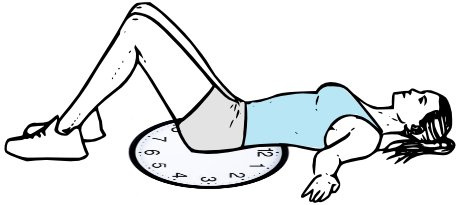
““I still was puzzled in the first few sessions that focused on just a few movements or exercises to establish what is called the pelvic clock. But at each weekly session, the new movements built on the previous week, a method I could appreciate as a former newswriting instructor, teaching the basic journalism language and incorporating more concepts and practices as students learned newswriting style.” ”
Jill Turns the Corner, & Beyond! 

As we worked together over the course of weeks to months to a year, we gradually progressed Jill’s home exercise program by introducing new movements, slightly more challenging than the week before. We continued to layer on educational and lifestyle components that were related to Jill’s life, including concepts of biomechanics, anatomy, exercise physiology, psychology, mindfulness, pain neuroscience, and more.  As Jill continued to learn and build her strength and confidence, she has been able to do more demanding physical tasks without any increase of pain.

“ “Through the sessions, I learned how to stand up and walk in new ways, to use my legs and tailbone to shift weight, to improve the flexibility of my entire spine—all aimed at relieving the pressure and weight on the lumbar part of my spine. We also did relaxation and simple meditation to promote mind-body connection. After each session, I received an email, summarizing our activity. I have compiled all those exercises and support into a file that I can use to refresh my memory of exercises—and to see my progress.” ”
““The knowledge and movements I learned gave me a feeling of accomplishment and control over the mechanics of my body. Usually an exercise or stretch would relieve the pain, and I did not take any medication. A triumph!” ”

Jill is doing much better today, and feels that she has gotten her life back. She no longer feels limited by her pain, and feels empowered to stay active and engaged in life. She is now back to rowing (weather-permitting!), going to the gym twice per week, and having no trouble lifting her quickly growing grandchildren!

Jill also improved on the Modified Oswestry Disability Index (a survey used to measure the impact that back pain has on quality of life) from a 58% to a 12% over a period of six months, which is over four times the threshold of clinically significant improvement. 

Stay tuned in to see our next blog post, which will break down more specifically what we addressed with Jill biologically, psychologically, and socially.

Written by Jacob Tyson, DPT - Physical Therapist, Yoga Instructor and The Wellness Station Team

Yoga: Like Flossing for your Joints!

For our whole lives, we participate in a daily practice to ensure the health of our teeth, as it is obvious that tooth decay is extremely undesirable. Neglecting dental hygiene can lead to issues far beyond affecting that beautiful smile on your face, including infection, as well as compromised gut and heart health. In order to ensure dental health, we brush and floss daily, and visit the dentist two times per year. We have accepted this as the gold standard practice, and dental hygiene becomes almost an unconscious part of our lives.

What about our joints? We have over 200 of them in our body, and without them, we would be unable to move. Each of these joints desperately need movement, compression, and relaxation in order to stay healthy, mobile, and well-lubricated. Unfortunately, we have an epidemic of poor joint health that is on the rise. In fact, around a quarter of US citizens have arthritis (an inflammatory disease of the joints), and the prevalence of knee osteoarthritis has actually doubled since the mid-20th century.1 This is contributing to extreme rises in healthcare costs, risky surgeries, chronic disability, and unnecessary pain and suffering. Poor joint health is also associated with many other health conditions- depression, cardiovascular disease, stroke, and metabolic conditions such as diabetes.2 There are many theories as to why the incidence of this disease is so high- increasing weight, sedentary behavior, as well as the overall aging of our population. However, there is little discussion about how to address the root cause of this disease through education and prevention.

Why is there not more education about how to keep our joints healthy as we go through our lives? My main takeaways from gym class growing up were pretty much as follows: how many sit ups and chin ups can I do in a minute in order to "perform well" on the presidential fitness test, as well as how quickly can I run a mile in order not to embarrass myself around my peers? However, there was absolutely no discussion of joint health in any of my education up until physical therapy school.

What joints need is movement- movement that goes behind repetitive gym exercises, walking, and running. As joints do not have great blood supply, they are completely reliant on us moving our bodies through our given ranges of motion in order to distribute the lubricating synovial fluid around the joint space. As we move and load our joints through their given ranges of motion, we develop an improved mind-body awareness that helps us control the force we put through each joint through our body's posturing and muscle recruitment/relaxation. By regularly moving each joint, we also build up our injury resistance to both chronic and acute injuries. For example, if you never practice moving your ankle inwards, and then you accidentally trip over a root during a hike that forces your ankle into an inward position, you will be far more likely to sprain this joint compared to someone who regularly practices moving and loading their ankle in this position.

One might be thinking…."Are you telling me that in order to have to have healthy joints, I have to move each and every one of them every single day?? This sounds like a lot of work… I already have enough on my plate, especially with how often I am supposed to floss my teeth!"

Luckily, even a brief mindful movement practice such as yoga can help ensure your joint health! A yoga practice has the potential to move every joint and engage every muscle in your body in a relatively short, continuous sequence. And, you will naturally start to use what you learn on the mat in your daily life as well, perhaps without even meaning to! Rather than a chore, a yoga practice can be fun, and make you feel more comfortable and strong in your body. Yoga can be an excellent supplement to whatever else is in your fitness routine that can actually improve your performance in other athletic endeavors as well.

Written by: Jacob Tyson, DPT - Physical Therapist and Yoga Instructor

References:

  1. https://www.pnas.org/content/114/35/9332

  2. https://pubmed.ncbi.nlm.nih.gov/31207113/#:~:text=The%20key%20comorbidities%20associated%20with,to%20have%20other%20chronic%20conditions.

Overdoing: To Do or Not To Do?

We live in a culture that is “go go go”, where we prioritize doing far more than not doing. Many of us juggle excessive work hours, family and household responsibilities, hobbies, fitness and wellness practice, social lives, errands, appointments, and more. We are often left with little to no down time, and when we do have this down time, we may spend it in ways that are less than ideal for restoring balance and peace back into our lives. This constant rush can be stressful and taxing on our bodies and minds, and due to time constraints we begin to have to pick and choose what we do. Self-care and sleep may be underprioritized, setting us up for burnout.

Think about yourself as a tea kettle: a 100% full tea kettle means you are in a state of optimal health, energy, comfort, peace, happiness, and overall well-being. The less tea you have in the kettle, the less bandwidth you have, which can manifest in irritability, exhaustion, reduced performance, as well as mental and physical health challenges if this continues over time.

If our goal with the “go go go” mentality is to achieve and succeed, but this mentality actually can set us up for failure over the long term, isn’t this entirely counter productive?

Think about what sources in your life are draining your tea kettle, and what sources are helping to fill up your kettle. Consider both external and internal factors. External may be people, situations, and activities, whereas internal may be thoughts, beliefs, behaviors, emotional reactivity, and movement patterns. What changes can you make in your life to ensure you have a full kettle? After all, an empty kettle serves no one!

Written by Jacob Tyson, DPT - Physical Therapist, Yoga Instructor and The Wellness Station Team
Reflections on Giving and Receiving

When Giving is Receiving

In giving what may be required is to contemplate a  cause, a group or a person -finding the essence of a need or desire. 

 Through attentiveness and deep caring the giver may surprise the recipient(s) by showing that someone else understands them and through a display of giving virtuosity, can even identify needs they may not have been aware of or could not admit to themselves. 

Benefits  of Being a Giver

The recipient has the astonishing ability to acknowledge both the somebody who has given and the something that is given to them.

As far as we know, no other corner of creation but a human being has the ability to fully acknowledge the spirit of another in this way. 

To give is to take an imaginative journey and put oneself in the body, the mind and the anticipation of another. 

To give is to make our own identities more real in the world by committing to something specific in the other person and something tangible that could represent that quality. 

To give is also to carry out the difficult task of putting something of our own essence in what we have given. 

 Giving is a form of attention itself, a way of acknowledging and giving thanks for lives other than our own.

Giving is a“ mutually blessed“ experience.

Inspired By: “Consolations”by David Whyte